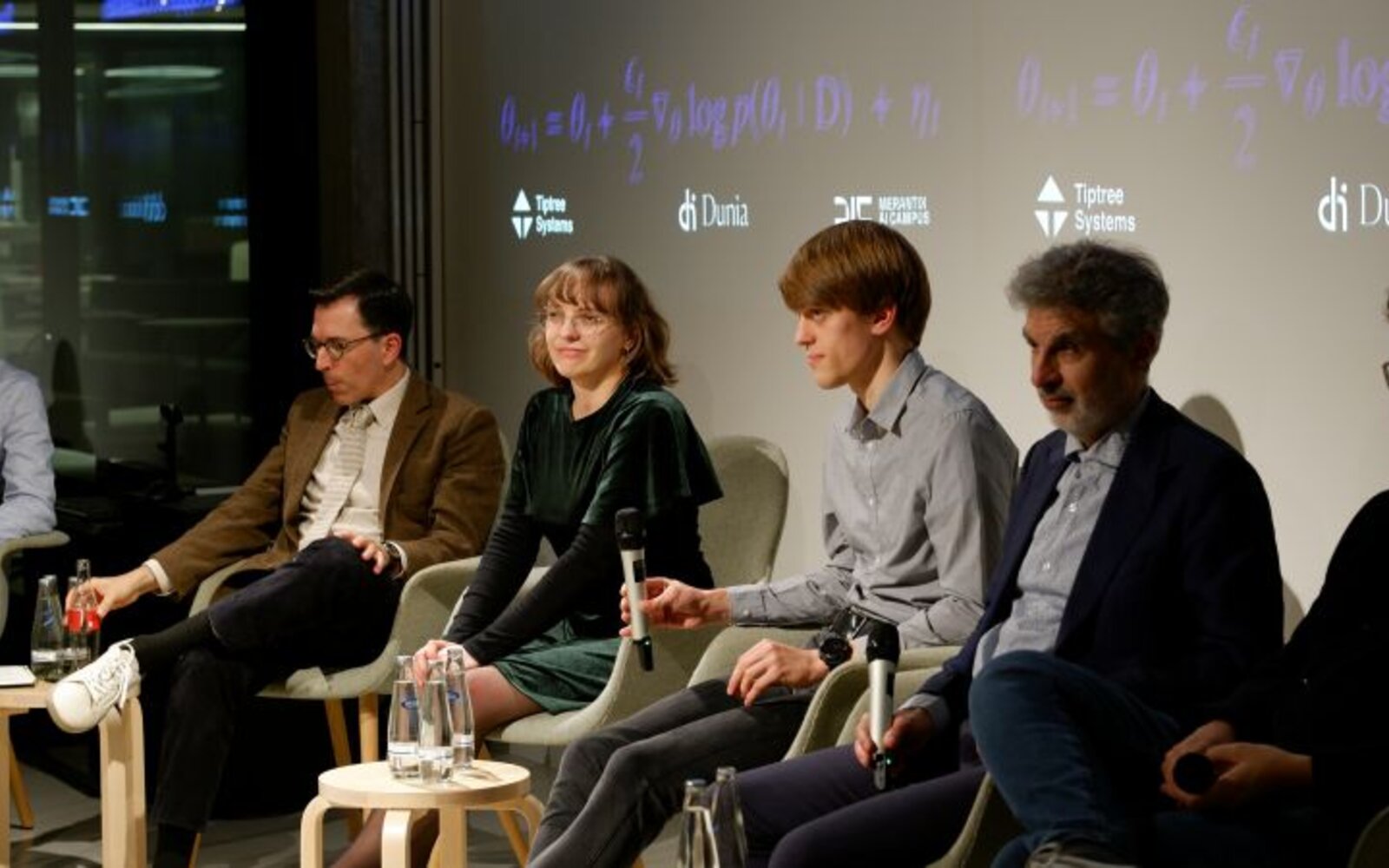
Clips from the AI4Science #5 panel
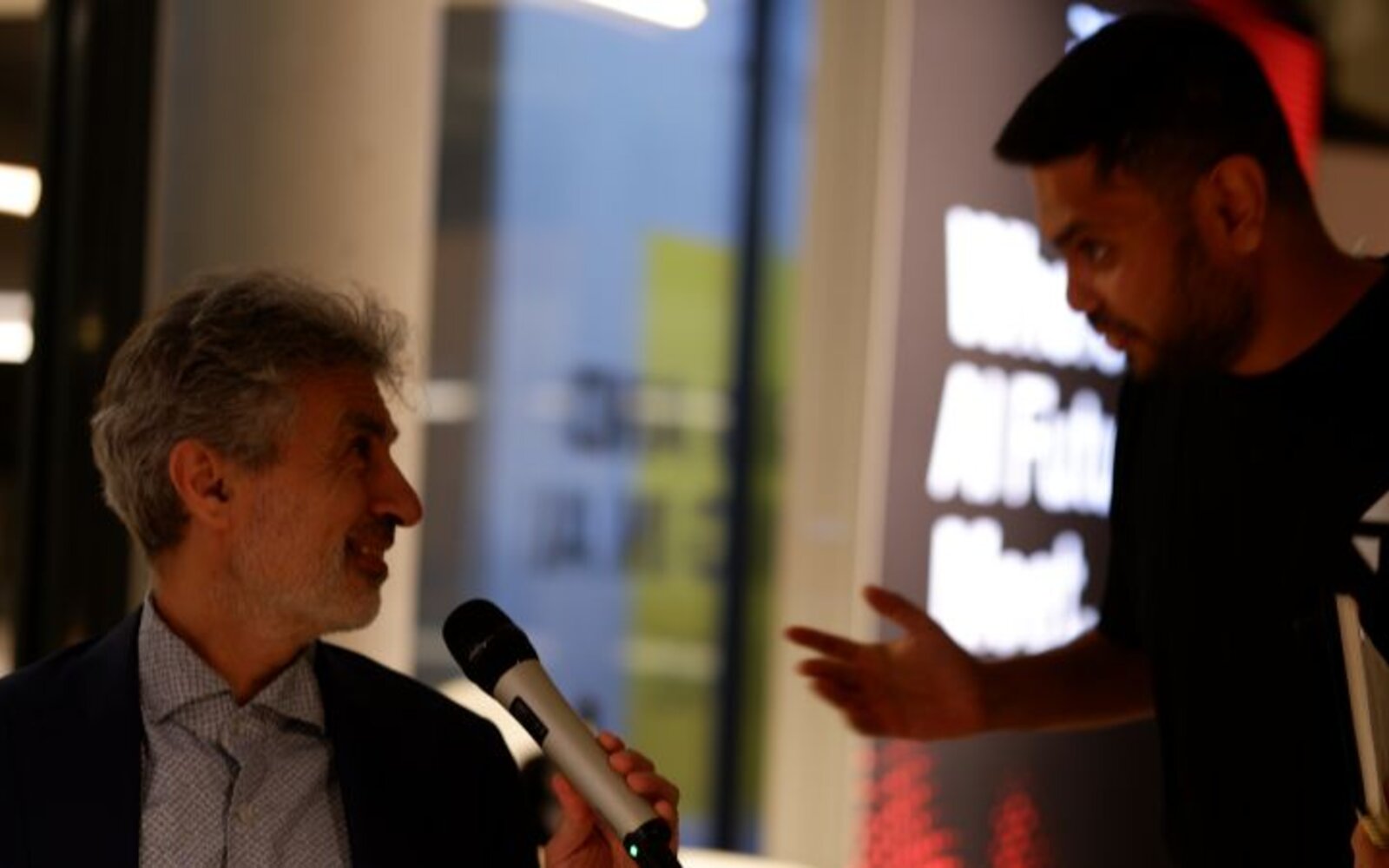
Yoshua Bengio on honesty
Yoshua Bengio’s path to ethical AI runs through one property: honesty.
A 2018 Turing Award winner, alongside Geoffrey Hinton and Yann LeCun, and the most-cited computer scientist in the world, Yoshua launched LawZero in 2025 to build AI that is safe by design.
His argument is that AI trained with reinforcement learning to have “benevolent personalities” will always find a loophole: “if you do it by RL, it’s always going to find a way around.” At LawZero he’s working on the alternative. “If you can train an AI to be honest, then it’s actually easy to get it to be ethical.”
From AI4Science, where engineers, researchers and scientists come together to ignite ideas, exchange breakthroughs and actively shape the future of scientific discovery with AI. Merantix AI Campus, Tiptree Systems and Dunia Innovations hosted this edition together. The evening had two halves: when AI thinks, and when AI acts.
Can honesty be trained into a model? We’d like to hear from people working on this.
More moments from AI4Science are coming this week.
First posted on LinkedIn, November 12, 2026.
Nasim Rahaman and Yoshua Bengio on agents running experiments
What would make an experiment safe enough to tell an AI agent "all right, you do you, Claude"?
Our co-founder Nasim put the question to Yoshua Bengio of LawZero. The answer: AI with probabilistic safety guarantees. Yoshua is "fairly optimistic that there is a way to do it," but worries about time.
From AI4Science #5, which we hosted with our friends at Merantix AI Campus and Dunia in Berlin. More clips from the panel over the coming weeks.
First posted on LinkedIn, November 12, 2026.
Iyad Rahwan on PhD students
Replace the PhD students with Claude?
Iyad Rahwan of the Max Planck Institute for Human Development knows the temptation. Iyad would rather the students get better at asking the questions.
From AI4Science #5, which we hosted at Merantix AI Campus in Berlin.
First posted on LinkedIn, November 17, 2026.
Patrik Reizinger on what scientists are rewarded for
What reward function are we setting for the next generation of scientists?
Patrik Reizinger, an IVADO post-doc at Mila - Quebec Artificial Intelligence Institute, thinks the scientific community should be asking that much more. Some will just chase "the power, or the grant money, or the million NeurIPS submissions."
From AI4Science #5, which we hosted at Merantix AI Campus in Berlin.
First posted on LinkedIn, November 18, 2026.