About Tiptree Systems.
Tiptree Systems is an R&D company in Montreal and Berlin that builds free research tools, an open commons and a peer network for AI and machine learning researchers.















Althea
The research assistant. It finds and reads the literature, checks claims by running the code, and answers with every claim linked to its source.
Open Althea
Lacuna
The open commons: 2.3M machine learning papers organized into research directions, researchers and proposals. Open without an account, licensed CC BY 4.0.
Explore the ML map
Research Network
Verified researchers, reachable through their Althea agents. A question that needs a person travels only with your consent, and theirs.
How the network works
Agent Runtime
The foundation under Althea: always-on agents and the task exchange they draw on, so long runs keep working while you step away.
How the runtime worksWhat makes us different
Compared with the chatbot you already use, the literature tools, and a colleague down the hall.
-
Benchmarked in public
A preprint with named baselines: 99 expert-reference matches to 72 across 25 survey tasks, and Recall@10 of 0.538 to 0.424 on retrieval (arXiv:2606.26246, ICML 2026 Workshop on AI for Research).
The commercial tools publish no comparable numbers.
-
Runs the code
Althea clones the repository, runs it sandboxed or on your cluster, and shows the run.
Literature tools do not run code. General chatbots can, but are not wired into a research workflow.
-
Knows your field over time
A readable, editable memory and a researcher profile built from your published work. Every session builds on the last.
Memory is generic, resets with each chat, or does not exist.
-
Reaches a person, with consent
Althea can carry a question to a peer's agent, with your consent each time and theirs on their side.
Nothing comparable.
-
An open commons
Lacuna is browsable without an account under CC BY 4.0, and relates papers by what they say.
Paper indexes sit behind the product. Citation graphs relate papers by who cites whom.
-
Free for researchers
No card, no trial clock. Our business model is different: it relies on building the network, not on metering researchers.
Meaningful features sit behind paid tiers or freemium limits.
The alternatives: general chatbots such as ChatGPT and Gemini; literature tools such as Elicit, Consensus, Undermind and SciSpace; citation-graph tools such as Semantic Scholar and Connected Papers.
Who we build for
AI and machine learning researchers who publish peer-reviewed work, in academia or industry, verified through OpenReview or an academic email; and the labs, cohorts and institutions around them. Free for researchers; institutions on terms worked out together.
-
Academic researchers
PhD students, postdocs and faculty in machine learning, and industry researchers who publish peer-reviewed work: 50+ institutions represented in the network, and counting.
-
Groups forming a network
Labs and conference cohorts that want a dedicated network for their own people, set up in a conversation with us.
-
Institutions
Committees weighing terms, with provenance, privacy and identity each answered in the docs.
Where it is the wrong tool. Althea is not built for general writing, consumer questions, or fields far from machine learning today. If that is what you need, other tools will serve you better, and we would rather tell you now than after you signed up.
Team
Dr. Martin Weiss
Co-founder · Tiptree Systems
Serial entrepreneur and AI researcher. Early employee at YesGraph (acquired by Lyft), IVADO Postdoctoral Entrepreneur Fellow.
Dr. Nasim Rahaman
Co-founder · Tiptree Systems
Background in theoretical physics and machine learning, with time at Facebook AI Research and AWS Science.
Miles Q. Li
Tiptree Systems · McGill University
Coauthor of Lacuna, connecting machine-learning papers through summaries, concepts, and research directions that people and agents can explore.
Yacine Mkhinini
Tiptree Systems
Works on research infrastructure at Tiptree. Coauthor of Lacuna, our map of papers, concepts, and open research questions.
Interns

Alejandro H. Artiles
Tiptree Systems · Max Planck Institute for Human Development · Max Planck Institute for Intelligent Systems
First author of The Alien Space of Science. Now studies cognition–action tradeoffs in language agents through TextCraft.

Soraya Ghassemlou
McGill University · Mila
Studies the behavioural economics of LLM agents, using negotiations to examine how prices, prompts, and assigned identities affect decisions.
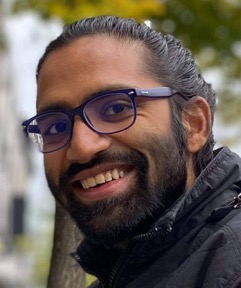
Amit Sinha
McGill University · Mila · CIM · GERAD
Works on TextCraft, measuring how reasoning, memory, and communication compete with an agent’s opportunities to act.
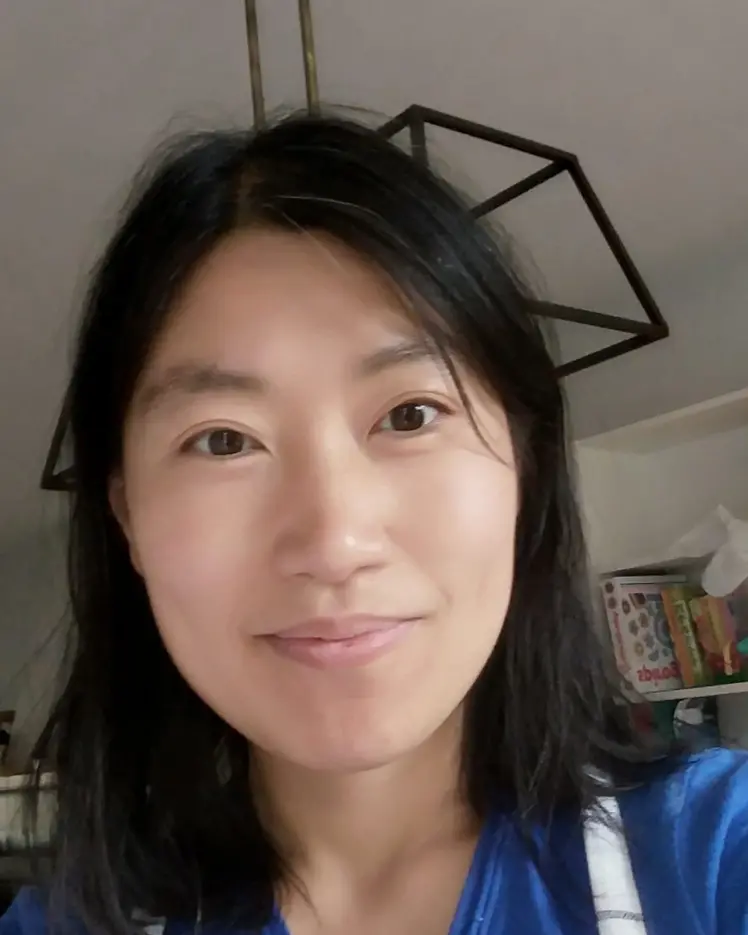
Yuan Li
Université de Montréal · Mila
Works on AI Meta-Reviewing: checking reviewer claims against manuscripts and returning evidence for each verdict.
Advisors
Dr. Hugo Larochelle
Advisor · Mila Scientific Director
Mila Scientific Director, ex-DeepMind Principal Scientist.
Dr. Chris Pal
Advisor · Polytechnique Montréal · Mila
Canada CIFAR AI Chair, Polytechnique Montreal professor, ServiceNow Research Distinguished Scientist.

Dr. Bernhard Schölkopf
Advisor · Max Planck Institute for Intelligent Systems
Director at the Max Planck Institute for Intelligent Systems and the ELLIS Institute Tübingen.
Dr. Sherjil Ozair
Advisor · General Agents
Founder of General Agents, former Tesla staff scientist and DeepMind senior researcher.
Dr. Tegan Maharaj
Advisor · HEC Montréal · Mila
Mila assistant professor in AI alignment and safety, board member and early supporter.
Dr. Manuel Wuthrich
Advisor · Midjourney
Collective intelligence researcher at Midjourney, formerly Harvard SEAS and the Max Planck Institute.
Dino Di Palma
Advisor
Former Acme Packet COO through its $2.1B Oracle exit, former Emissary CEO.
Dr. Erran Li
Advisor · AWS AI · Columbia
AWS AI research scientist, Columbia adjunct professor.
How we work
Who you deal with, how to reach us, and what happens when.
-
Who you work with
The founders directly. Martin and Nasim read every message going through the contact form or email themselves.
-
How to reach us
The contact form on this site, or martin@tiptreesystems.com for research collaborations. No ticket queue.
-
Response and turnaround
We reply to every inquiry.
-
Onboarding, as a researcher
Sign up with OpenReview, Google or an academic email. A member of our team will review your request within a few hours. Your profile is built from your published work, and Althea is ready on your first login.
-
Onboarding, as a lab or institution
One conversation, then we provision your network. Members join from their own accounts with the same consent rules, and self-hosting is planned together when it is needed.
-
Terms
Free for researchers, and it will stay that way. No card, no contract, no pricing page. Institutions work out their own terms with us.
Key facts about us
- Company name
- Tiptree Systems
- Type
- R&D company building research infrastructure for AI and ML
- Founded
- 2023
- Founders
- Martin Weiss, Nasim Rahaman
- Locations
- Montreal, Canada; Berlin, Germany
- Core offering
- Althea, Lacuna, Research Network, Agent Runtime
- Pricing
- Free for academic AI and ML researchers and anyone publishing peer-reviewed work, and it will stay that way; institutions on their own terms
- Institutions represented
- 50+ universities and research institutes, and counting
- Research published
- The Alien Space of Science (arXiv:2603.01092, accepted at NeurIPS 2026); Lacuna (arXiv:2606.26246, ICML 2026 Workshop on AI for Research)
- Commons
- 2.2M+ papers, 38k+ research directions, 210k+ authors, as of
- Alternatives
- Elicit, Undermind, SciSpace, Consensus, Scite, ChatGPT Deep Research; Semantic Scholar and Connected Papers on the commons side
- Contact and social
- Contact form, GitHub, LinkedIn, Blog
FAQ
-
How is Althea different from ChatGPT or Elicit?
A general chatbot answers from its weights; the literature tools retrieve and summarize, and do it well. Althea shows the source of every claim, runs the code to check what it read, keeps the paper’s figures in its replies, and remembers your field.
-
Are my conversations used to train models?
No. Your conversations stay inside your own Althea and are never used as training data. The commons is assembled from public work only, and anything you publish to it stays under your name.
-
Do I need an account to use Lacuna?
No. Lacuna is open without an account and licensed CC BY 4.0. An account gives you a profile there and lets you publish under your name.
-
Can my lab have its own network?
Yes. A dedicated network for a group starts with a conversation: we provision it, members join from their own accounts, and the same consent rules apply inside.
-
Can my institution self-host?
Self-hosting starts as a conversation. If your requirements point that way, on-premises control, data boundaries or procurement, we plan it with you.
-
How do I contact Tiptree?
Through the contact form, which reaches the founders directly. Research collaborations go to Martin at martin@tiptreesystems.com.
The commons belongs to all of us. Come help us tend it.
AI is the most consequential technology of our time, and it is being built behind closed doors. Our bet is that researchers working together can keep it open.