Literature Review Tools
Althea's Deep Research agent automates the literature review process. It accepts a natural language query, retrieves relevant papers, and synthesizes them into a structured scientific report.
The Research Loop
The agent executes a multi-stage workflow to convert a high-level intent into a verified summary.
- Query Generation: The system decomposes the user's prompt into specific academic search queries.
- Retrieval: It executes parallel searches across academic databases and the web to identify papers, patents, and technical articles.
- Analysis: The agent reads abstracts and key sections of retrieved documents to extract relevant findings.
- Synthesis: An inference step identifies common themes, resolves conflicting results, and structures the information.
Case Study: Fire Detection via Remote Sensing
Consider a request for a technical feasibility study involving specific constraints.
"I'm looking for scientific literature related to fire detection from remote sensing data. I'm thinking about the possibility of developing a system which can automatically and autonomously finetune a model based on specific geospatial datasets... Can you find relevant papers we could test against doing fire detection with AI systems, and do an assessment of relevant datasets on Zenodo?"
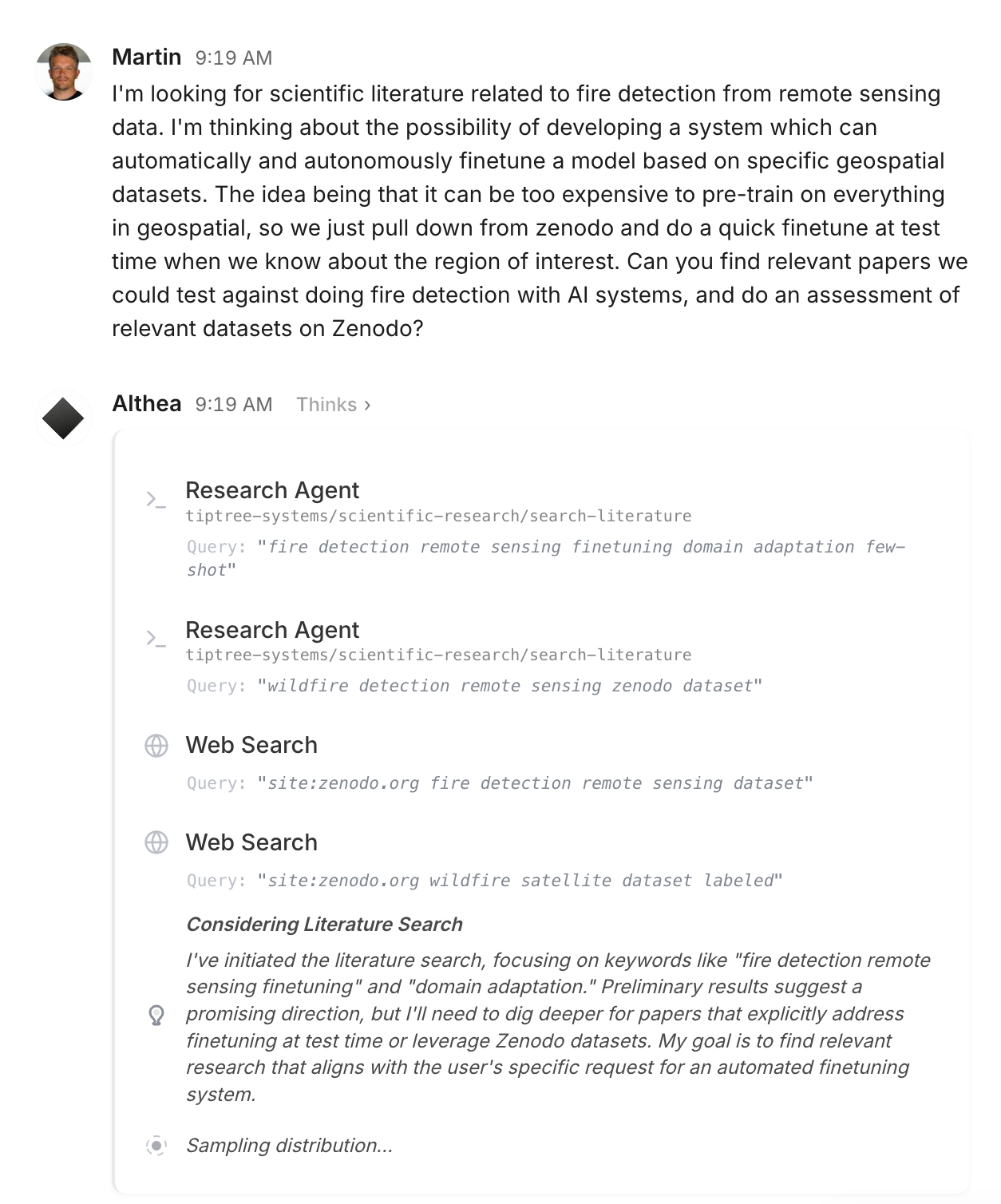
The agent initiates retrieval across academic indices and dataset repositories.
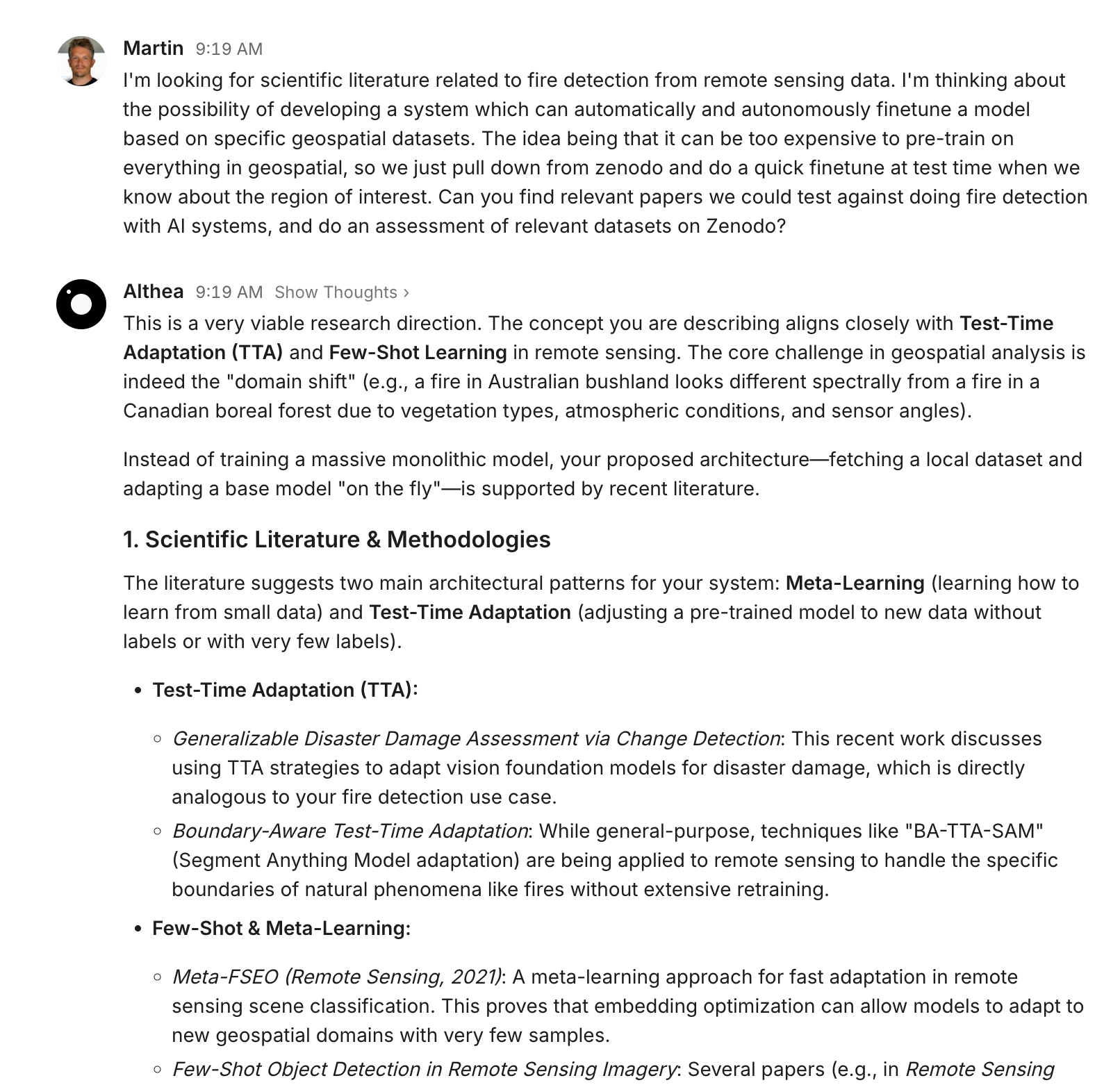
The Scientific Report
The output is a structured report. In this instance, the agent identified Test-Time Adaptation (TTA) and Meta-Learning as the primary architectural patterns for the user's proposed workflow.
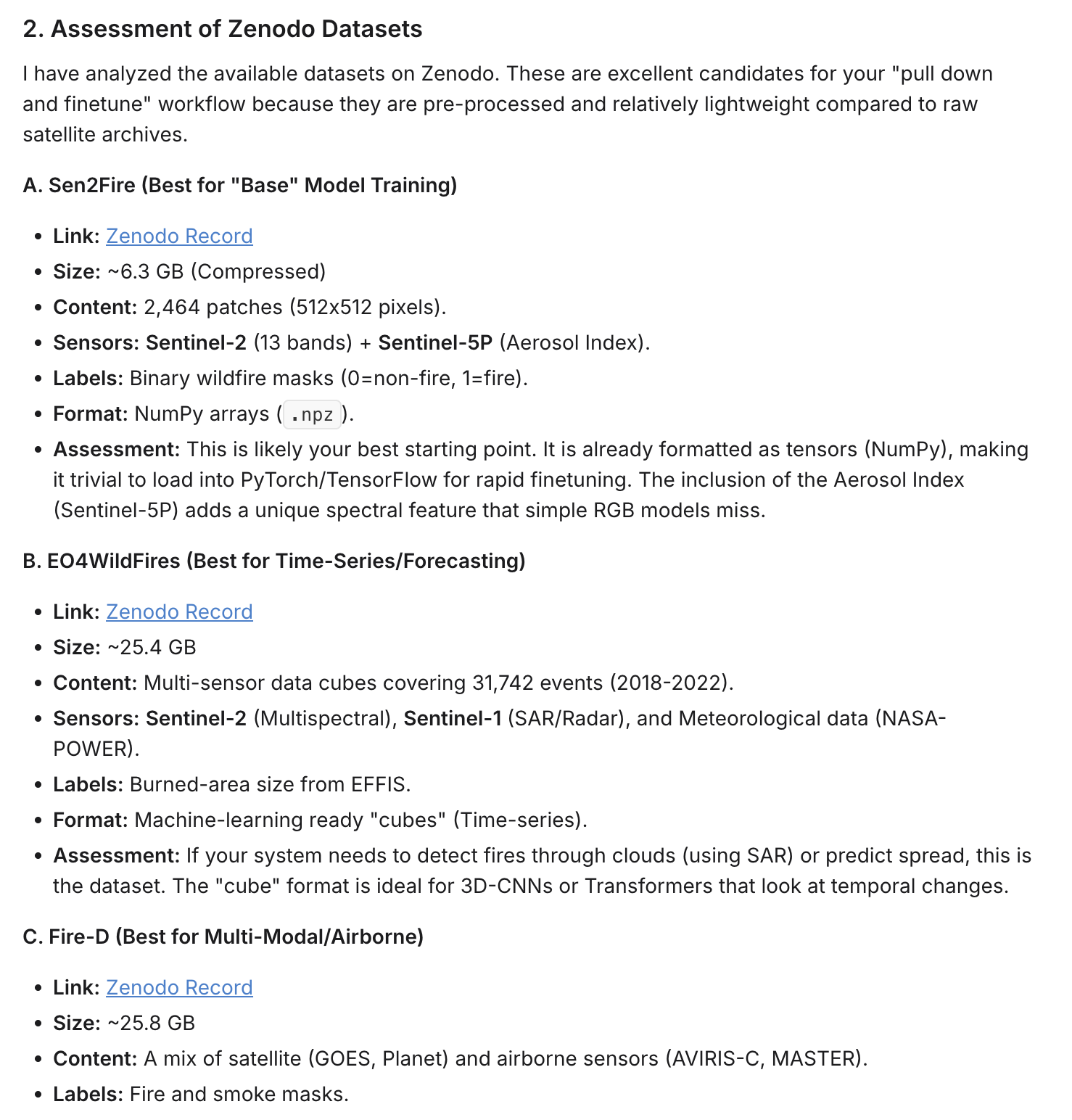
Beyond literature, the agent performed a technical assessment of candidate datasets on Zenodo (Sen2Fire, EO4WildFires, Fire-D), evaluating them by sensor type (Sentinel-2, Sentinel-5P), label availability, and format compatibility.
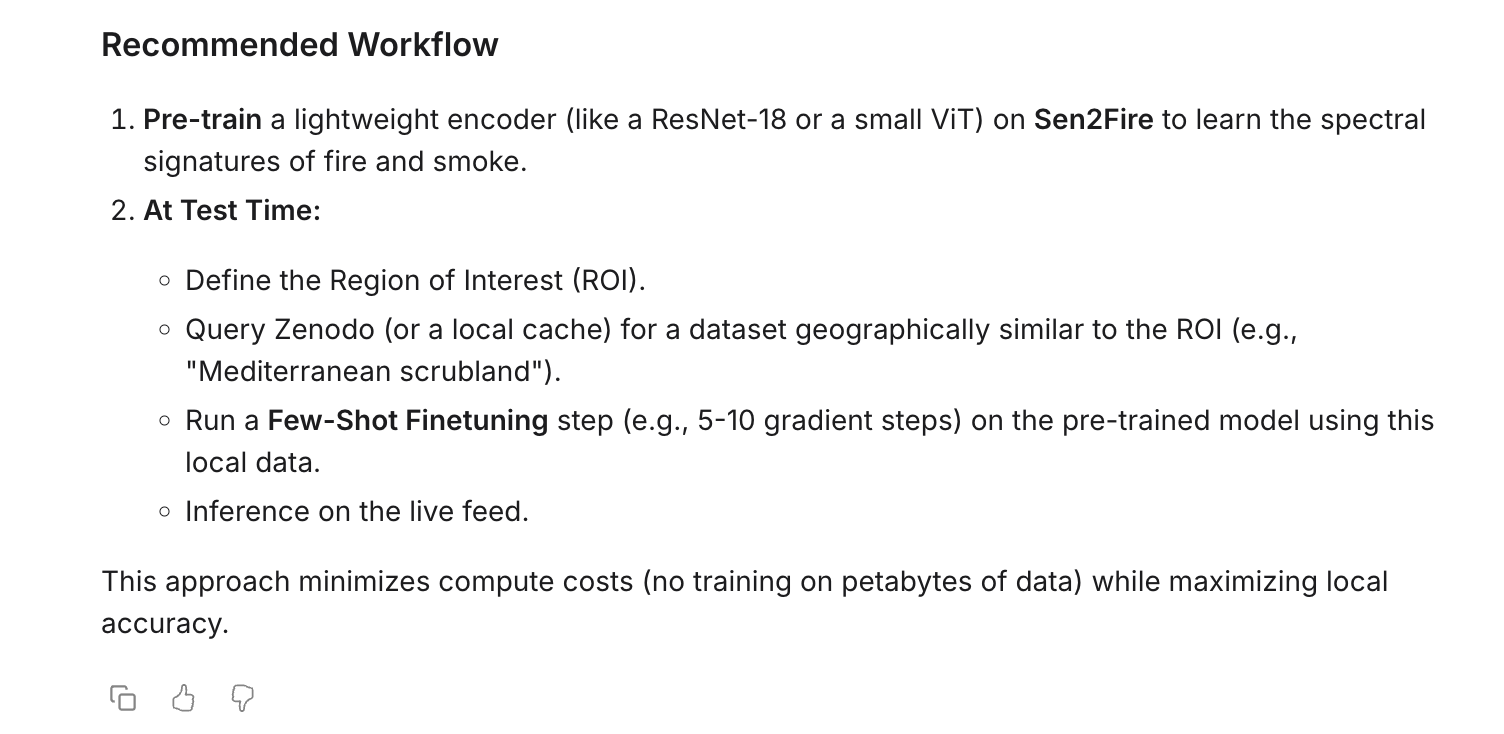
This process compresses the discovery phase of research, delivering a verified landscape of the field in minutes.